Estimated delivery: Sun, Oct 25 to Sun, Nov 1. Canvas Board kits take longer, see shipping details.
Need An Extra Paint Set?
Greyhounds
(This item)
3 reviews
$29.95 USD
Extra Paint Kit to Elevate Paint by Numbers Experience
24 reviews
$14.95 USD
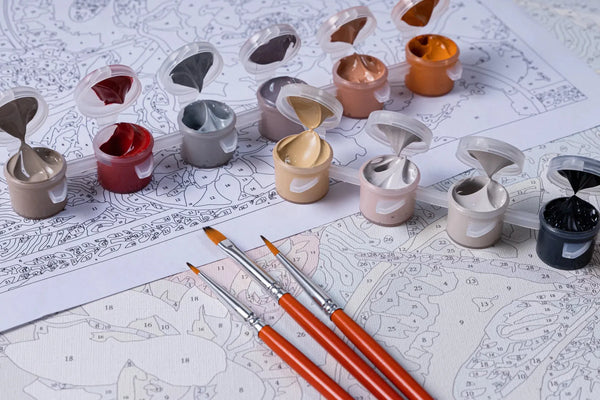
All our Canvas by Numbers painting kits include everything you need:
Finely woven linen blend canvas.
Pre-mixed acrylic-based paint set.
3x artist paint brushes.
Reference sheet of the canvas.
Getting Started quick guide.
Choose the finish that best fits how you like to paint and display your artwork:
Rolled (No Frame) – The canvas is shipped rolled inside a sturdy PVC tube. It’s easy to store, travel with, or take to your local framer.
DIY Frame – You receive a rolled canvas plus four wooden stretcher bars. Simply assemble the frame, stretch the canvas at home, and enjoy a snug, custom fit.
Pre-Stretched on Frame – The canvas arrives already mounted on a wooden stretcher frame. Start painting right away and hang it up as soon as you're done.
Canvas Board – The canvas is securely fixed to a 0.2-inch thick wooden panel, giving you a sturdy, warping-resistant surface ideal for tabletop painting.
Beginners: Perfect for newcomers or those seeking a relaxing painting session. These kits are designed to complete within a week and offer a delightful way to unwind.
Intermediate: Step up your game with kits that offer a bit more challenge. Ideal if you're ready to dedicate more than a week to create your artwork.
Advanced: For those who love detail! These kits feature tiny sections for an intricate finish and may take two weeks or more to complete. Prepare for a stunningly detailed masterpiece!
Please keep in mind that our kit levels are just a guide. Everyone paints at their own pace, so you might find a kit easier or harder than expected based on your experience. Happy painting!
Fast U.S. Shipping: Most orders ship from our California or Texas locations and arrive within 3–7 business days.
Please note: Canvas board kits and orders outside the U.S. may take 7–14 business days, as they are shipped from a partner facility.
Tracking & Shipping Protection: Every order is tracked and includes free shipping insurance.
Free Returns: If you are not fully satisfied, you can return your kit free of charge. See our Canvas Guarantee below for details.
30-Day Free Returns We want you to love every part of the experience. If you’re not fully satisfied, you can return your kit free within 30 days.
Free Paint Refill Promise Every kit includes plenty of paint to complete your artwork. If you ever run low, we’ll send extra paint at no additional cost.
Designed for Exceptional Results From our premium canvas quality to our exclusive artwork, every detail is chosen to help you create a piece worth displaying.
Painting Area:
16 x 20 in (40x50cm) 20 x 24 in (50x60cm) 24 x 30 in (60x75cm)
Total Canvas Area: painting area + 2.75 in (7 cm) for the white borders.
🎨 Standard Detail – A great choice for a simpler, more relaxed painting experience. With 24–32 colors, it offers nice detail and a beautiful finished piece while keeping the project easier and quicker to complete.
🖌 Premium Detail – Our most popular option for the best overall result. With 48 colors, you’ll get finer details, smoother shading, and a more realistic finished painting. It takes a bit more time, but the extra depth and richness make it well worth it.
ℹ️ Please Note – The image shown is the original artwork for reference. We convert this artwork into a numbered painting design, so some differences in colors, fine details, and overall appearance may occur.
Not at all! Our kits are designed for both beginners and experienced artists. The numbered guide makes it easy to follow along, and many users find the process meditative and relaxing. Simply match the numbers on the canvas with the numbers on the paint and start creating!
Some colors, mostly yellows, whites, light pinks and pale blues, are semi-transparent, so the printed numbers and lines can show through after one coat. That is normal. Let the first coat dry, then add a second one. Painting the light areas before the dark ones next to them also helps, and avoid adding water, which makes the paint thinner.
If the paint is still wet, wipe it off with a damp cotton swab. If it has dried, simply paint over it with the right color once it is completely dry. Covering a dark color with a light one may need two or three thin coats. Acrylic paint is very forgiving, so a small slip is easy to hide.
Close each pot tightly after use, since acrylic paint dries quickly when left open. If a color has become thick, add one or two drops of water and stir. If it has dried out completely, contact us with the color number: within 60 days of delivery we send replacement paints for free.
It depends on the kit level, the size and your own pace. As a guide, Beginner kits take about a week of relaxed painting, Intermediate kits a little more than a week, and Advanced kits two weeks or more. A larger size or Premium detail adds time. It's not a race, so enjoy the process.
A pre-stretched kit is ready to hang once the paint is dry, with a hanging kit included. A rolled canvas can go on our DIY frame or to a local framer. Our canvases are made in metric sizes (40x50 cm is slightly smaller than 16x20"), so measure the painted area before buying a frame.
Most orders ship from our California or Texas locations and arrive in 3 to 7 business days in the US. Canvas board kits and orders outside the US take 7 to 14 business days. The Shipping Information tab on this page shows the estimate for this item.
We will send tracking information to the e-mail address associated with your order once the item has shipped.
At Canvas by Numbers, we're proud of our exceptional customer service. Understanding the intricacies of art creation, we offer a 60-day guarantee where we'll send extra paints for free should you run out of any color.
Yes, safety is a top priority for us. The paints used in our kits are water-based, non-toxic, and environmentally friendly. Likewise, the materials in our diamond painting kits are non-hazardous. Always use the kits as directed and keep them out of reach of small children.
Born in 1887 in northern Portugal, Souza-Cardoso moved to Paris in 1906 and quickly joined the city's avant-garde. In 1913 several of his works were shown at the Armory Show in New York, and they sold well. He died in 1918, aged 30, in the Spanish flu pandemic, and his work was then largely forgotten for decades.
A Portuguese Painter in Modern Paris
In Paris he became close friends with Amedeo Modigliani, and in 1911 the two showed their work together in a studio exhibition. He also knew Brâncuși and Robert and Sonia Delaunay. His style moved quickly through the new ideas of those years, from Art Nouveau curves to Cubist and Futurist shapes.
Greyhounds dates from around 1911, early in that search.
What to Look for in Greyhounds
Two long dogs stretch across a flat plane of ochre, their bodies drawn as clean, elastic curves. Ahead of them, small animals flee. There is almost no depth or detail, only shape and rhythm, and that is what gives the picture its sense of speed. Notice how the curves of the dogs and the rabbits echo each other.
Painting Greyhounds by Numbers
The greyhounds aren't really black. Deep brown, navy and chocolate run through their bodies, and that mix gives them their speed. The ochre ground has quiet shifts in temperature too. Paint the ground first, then the dogs, and finish with the small fleeing animals and the floating disk in the corner.
The bold shapes make progress visible every session, which keeps it satisfying. See more of the modern greats in our Famous Paintings collection.